
According to the Q2 2025 Market Pulse Survey from the International Business Brokers Association (IBBA) and M&A Source, the reality on Main Street is quite different. The survey found that an overwhelming 82% of business advisors surveyed said that fewer than 20% of their clients are delaying a sale due to current or future tariffs.
If you’re a business owner, you’ve probably heard the chatter around the impact of tariffs on the economy. It’s easy to assume that this uncertainty is causing most owners to put their plans to sell on hold. But what does the data actually say?
For Main Street businesses—defined in the survey as those with revenues from $0 to $2 million—the data suggests that while tariffs may influence some industries, they are not the primary driver of market timing decisions for the vast majority of owners.
Some Industries Feel the Pinch
This isn’t to say tariffs have zero impact. Certain sectors are more exposed to rising costs and supply chain disruptions. We see this most acutely in industries that rely heavily on imported goods:
- Construction & Trades: Contractors are dealing with higher costs for essential materials like steel, aluminum, and specialized fixtures, which can squeeze margins on fixed-price contracts.
- Automotive Services: Repair shops face increased prices for imported parts, affecting the cost and profitability of many common jobs.
For businesses in these areas, the pressure is real. Yet, even here, the decision to sell is rarely based on tariffs alone. 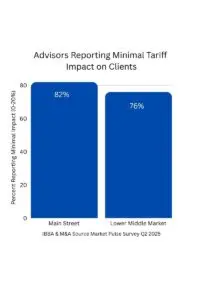
For the Concerned Few: A Tale of Two Mindsets
For that small percentage of owners where tariffs are a noticeable factor, it creates a fascinating “push-pull” dynamic. We see two distinct mindsets emerging.
The Push to Sell Now
This mindset is driven by a desire to get ahead of potential long-term issues. Owners in this camp think:
- “I want to sell before my value erodes.” These owners see their strong historical financials and worry that future years of lower profitability will drag down their company’s valuation. They would rather sell based on a strong track record than risk a lower price down the road.
- “The stress is no longer worth it.” The constant battle with pricing, suppliers, and uncertainty leads to burnout. For many, tariffs are the “last straw” that accelerates their desire to exit and move on to their next chapter.
The Pull to Hold Firm
This mindset is rooted in resilience and a belief in the long-term value of the business they’ve built. These owners think:
- “I won’t sell at a discount.” If their profits have already taken a temporary hit, they are unwilling to sell their life’s work for less than it’s truly worth. They believe the current market challenges don’t reflect the intrinsic value of their company.
- “This too shall pass.” These owners view the current trade policies as a temporary storm to be weathered. They choose to hold on, adapt their business, and wait to sell in a more stable economic climate to maximize their return.
What This Means For You
The decision to sell your business is one of the most significant of your life, and it’s driven by a unique combination of financial, personal, and market-based factors. While headlines may focus on tariffs, the data shows that the fundamentals are what truly matter to most owners: your personal readiness, your company’s performance, and the strategic opportunities available. The best decisions are made with clear data, not just noise. Understanding the true value of your business and the real state of the market is the essential first step. If you’re ready to cut through the headlines and confidentially explore your options, let’s talk.
#BusinessBroker #SellYourBusiness #MarketTrends #BusinessValuation #Tariffs